
The view from Cardiff
Yesterday I was invited to a workshop in Cardiff being run by Barry and Adam from HACT to develop the Centre for Excellence in Community Investment. I wasn’t exactly sure what to expect…
Yesterday I was invited to a workshop in Cardiff being run by Barry and Adam from HACT to develop the Centre for Excellence in Community Investment. I wasn’t exactly sure what to expect…

Following the budget announcements last week we welcomed the top level announcement on the additional support and funding for Universal Credit roll out. With 61% of customers in receipt of Universal Credit in arrears, Orbit have been actively looking at how we support customers and are successfully reducing levels of arrears.

This report assesses the barriers to employment and the impact of rent fluctuations and housing benefit.
This White Paper from Orbit Group and Fairbanking explains how Orbit Group is helping its customers take control of their finances.

Sure enough, Kevin from CoControl was true to his promise, turning up at his third consecutive roadshow. Despite being warned by Barry that all the roadshows follow the same format, Kevin was no doubt conscious there are regional and national differences that emerge through the discussions we have at roadshows. Glasgow proved to be no different.

As we continue our journey around the UK to talk with community investment colleagues to shape the Centre for Excellence, some of our intended outcomes are already being realised (albeit in a small way!).
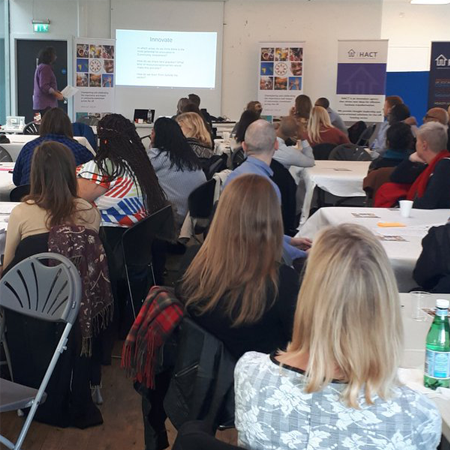
We’re making our way around the UK and visiting seven cities to develop the Centre for Excellence in Community Investment. On Monday we hosted our third roadshow and got the view from London.

The evaluation of the DOSH programme is based on answering the following question: is digital support, therapeutic mentoring or a combination of these elements more effective in improving the financial capability of A2Dominion residents?
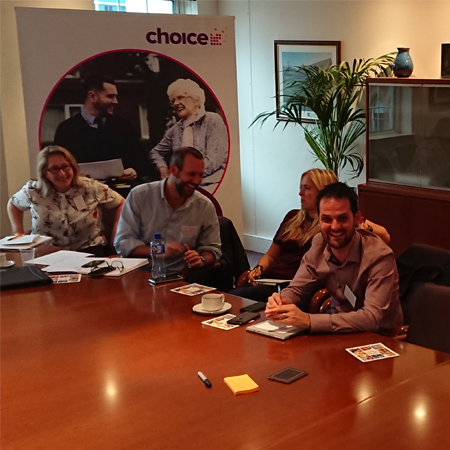
As we develop the Centre for Excellence in Community Investment, we’re hosting a series of roadshows around the UK. On Thursday, we were in Belfast and I had two key takeaways from this session.

This report identifies the elements of high-quality and innovative practice in the provision of home adaptations for older people. It highlights practical examples of local areas that are organising and delivering adaptations effectively.

The first roadshow was kindly hosted by colleagues at Yorkshire Housing. Attendees came from far and wide to hear about the Centre and input their view, with some making the journey from Bolton, Manchester, and Blackpool. The atmosphere in the room was lively from the start, with a warm buzz and friendly chatter setting the scene for the rest of the afternoon.

In this blog, I’m focusing on the fourth pillar of the Centre: inspire.

Building evidence that drives insight and demonstrates the impact of community investment, is the third pillar of the Centre. By focusing on evidence and research, we believe we can support community investment to be perceived as a robust area of business, rather than a nice add-on.

To encourage and promote innovation, we will curate a programme of thought leadership for the Centre, as well as developing ways of identifying and promoting best practice across the community investment sector.

Influence is one of the key functions of the Centre for Excellence in Community Investment: to provide a platform to champion the importance and impact of community investment across the UK.
HACT is delighted to announce that Sovereign Housing Association has signed up to be one of the five core funders of the Centre for Excellence in Community Investment.

James works at Saltworkz, a community café in Haywards Heath, and has been involved with youth work there since 2015.

This paper uses Millennium Cohort Study data to compare the cognitive, health, emotional, and behavioural development outcomes of children living in social housing compared with those living in private rented housing in England.

By using the UK social value bank and using its recommended questions to understand of the impact of financial circumstances on wellbeing, we may then be able to get to the source of a problem

Hayat is a Clarion Housing resident originally from Somalia and a single mother to seven young children. In Somali culture it is typical for women not to work, and combined with a language barrier and lack of knowledge about how to enter the job market, Hayat had never worked in the UK.

In collaboration with Bates Wells Braithwaite, Hyde has calculated the monetary value of their social tenancies. The report also the added benefit to the economy and maintenance as well as cost to taxpayers. It explores the value of social tenancy against relying on family/friends and less stable conditions.
In collaboration with Bates Wells Braithwaite, Hyde has calculated the monetary value of their social tenancies. The report also the added benefit to the economy and maintenance as well as cost to taxpayers. It explores the value of social tenancy against relying on family/friends and less stable conditions.
Using a combination of qualitative and quantitative research methods, this evaluation examines the outcomes for participants of Sanctuary Group’s Love Sport programme, as well as the social value generated. It also evaluates the delivery approaches taken by community partners to understand what worked well, and what was less successful.

Shelter’s analysis shows that in 2017 55% of families living in temporary accommodation were working. This represents over 33,000 families who were holding down a job despite having nowhere stable to live.